Travel Security and Scam Awareness Guide for Safer Trips

35% off on product page · save $5.92
Travel Security and Scam Awareness Guide for Safer Trips
A Calmer Way to Prepare
Travel safety starts with a few deliberate decisions. Whether you’re taking a vacation, traveling alone, or heading out for work, a simple routine can help you recognize suspicious requests without rushing.
Our Travel Security & Scam Awareness Guide is a digital safety handbook for thinking through risks before and during your trip. Pair it with current destination advice and trusted contacts.
Check the product’s listed specifications when evaluating a calmer way to prepare.
Recognize Common Travel Scams
Travel scams often exploit a moment when you’re tired, distracted, or eager to solve a problem. Unsolicited help, unusually cheap offers, and demands for immediate payment are reasons to pause. A convincing logo or a message that mentions your destination does not, by itself, prove that a request is genuine.
If a hotel, airline, or booking platform asks you to update payment information, don’t rely on the message’s links or phone number. Open the service directly or contact the business using details you found independently. The Federal Trade Commission’s travel scam guidance offers additional ways to spot questionable offers.
Use these examples to pause, check, and choose a safer response:
Travel Scam Warning Signs and Safer Responses
| Situation | Warning sign | Safer response |
|---|---|---|
| Booking message | Urgent request to update payment details | Open the booking service directly and check the reservation |
| Airport transport | Driver approaches with an unverified offer | Use an official taxi queue or a verified booking |
| Attraction or excursion | Pressure to pay before confirming details | Check the provider independently and review terms |
| Public Wi-Fi | An unexpected login or payment prompt | Avoid sensitive transactions and use a trusted connection |
If you’ve already paid or shared account details, contact your bank or service provider promptly using a trusted number. Change affected passwords and follow the provider’s instructions for securing the account.
Featured in this guide
Travel Security & Scam Awareness Guide | Digital Safety Handbook for Tourists, Solo Travelers & Business Trips
Keep Your Digital Life Secure
Update your phone, computer, and essential apps before departure. Set a strong screen lock and enable device-finding features so you have options if a device goes missing.
Treat unexpected QR codes, attachments, and messages cautiously, even when they appear to come from a hotel or airline. When possible, type the known website address yourself or use the organization’s official app.
Check account activity during your trip and report unfamiliar payments or login alerts promptly. Use a connection you trust for sensitive transactions.
Adapt Your Routine to Your Trip
If you’re traveling solo, arrange regular check-ins and agree on what your contact should do if they can’t reach you. Avoid posting your real-time location publicly.
On business trips, follow your employer’s guidance for devices, accounts, and sensitive information. Ask your IT team what to do if a device is lost or you receive an unusual sign-in request.
For any trip, keep a backup payment method separate from your main wallet when practical. Save your accommodation’s address and an independently obtained phone number offline.
If you like listening to audio while traveling, our Tribrid In-Ear Monitors are another option to consider. Keep the volume low enough to hear announcements and stay aware of your surroundings, especially in transit.
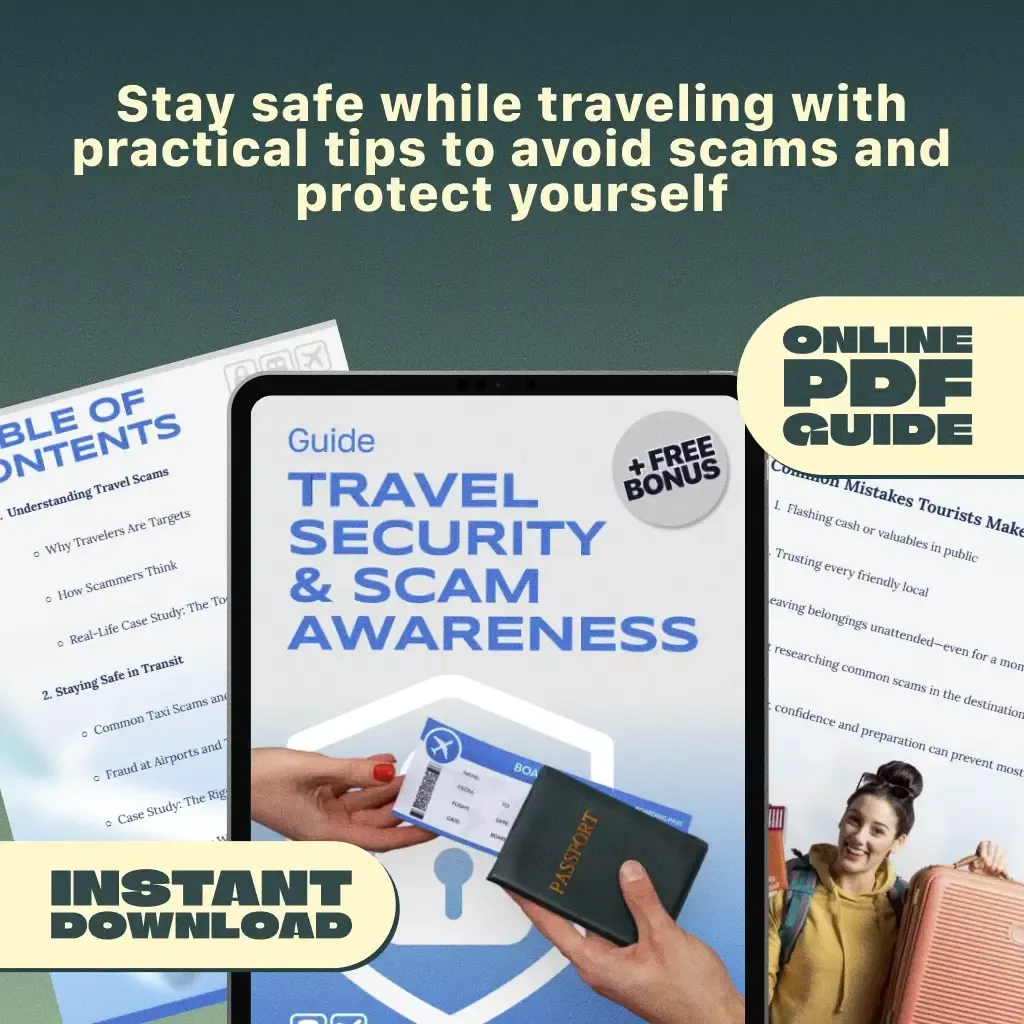
Watch · product page video
“a must-have for anyone exploring unfamiliar places or cultures.”
Allurete product page · Product review
Choose a Travel Safety Companion
Our Travel Security & Scam Awareness Guide is a digital handbook for tourists, solo travelers, and people taking business trips. Consider it if you want a companion for thinking through personal safety and suspicious requests as you plan.
Check the product’s listed specifications when evaluating choose a travel safety companion.
FAQ
Which timeshare resorts are under investigation?
Investigations change over time, so check current announcements from your state attorney general, consumer protection agency, or other relevant regulator for named resorts or companies.
Is this email legit or scam?
Check the sender carefully, avoid links and attachments, and contact the claimed organization through a trusted channel. No single sign proves an email is safe.
How do you know if a travel agent is scamming you?
Watch for pressure to pay immediately, unusually low prices, or reluctance to provide written terms. Independently check the business and confirm booking details with the travel provider.
What is a common travel scam?
A common travel scam starts when someone posing as a taxi driver approaches you at an airport, train station, or popular attraction and offers a ride without using an official pickup area. The driver may quote one fare and demand more at your destination, claim the meter is broken, or take a longer route to increase the charge.
See if Travel Security & Scam Awareness Guide | Digital Safety Handbook for Tourists, Solo Travelers & Business Trips fits your setup













Leave a comment