How to Calculate Hydraulic Press Tonnage

53% off on product page · save $264.96
How to Calculate Hydraulic Press Tonnage
Start With Pressure and Cylinder Area
To calculate the theoretical force of a hydraulic press, multiply hydraulic pressure in pounds per square inch (psi) by the effective piston area in square inches: force in pounds = pressure × piston area . To express that force in U.S. short tons, divide the result by 2,000, because one short ton equals 2,000 pounds.
For a round piston, calculate area with area = π × (bore diameter ÷ 2)² , using the cylinder’s inside bore diameter in inches. For example, a 4-inch bore has an area of approximately 12.57 square inches; at 3,000 psi, it produces about 37,700 pounds of theoretical force, or approximately 18.85 short tons.
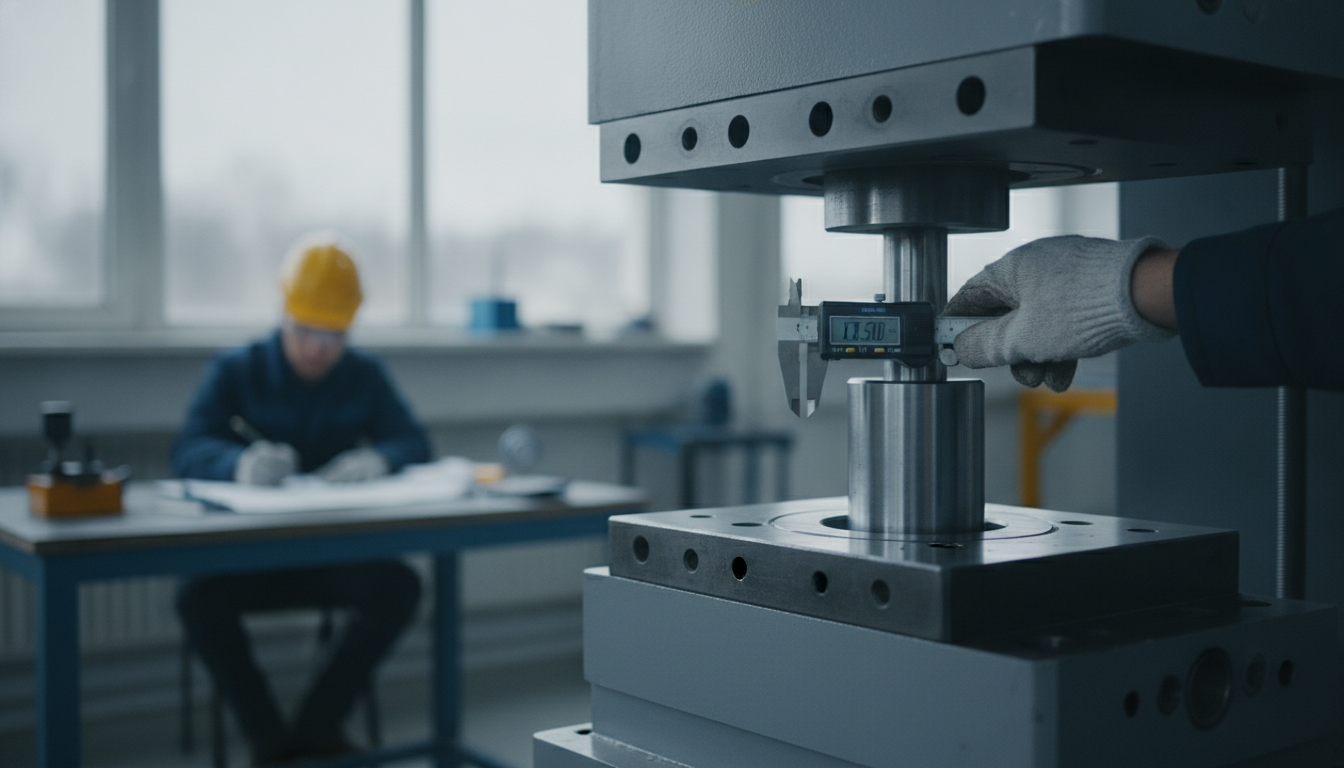
Measure the Correct Working Side
For a typical pressing stroke that applies pressure to the full piston face, use the full bore area in your calculation, not the outside diameter of the cylinder housing. If pressure acts on the rod side of a double-acting cylinder, subtract the rod’s cross-sectional area from the bore area before multiplying by pressure.
Use the actual working pressure for the stroke you are evaluating, and keep your units consistent throughout the calculation. The result is a theoretical cylinder force; friction and other losses can reduce the force delivered to the workpiece, so it should not be treated as a precise measurement of actual pressing force.
Featured in this guide
12-Ton Heavy Duty Hydraulic Shop Press for Garage and Workshop
Compare the Result With the Press Rating
A calculated cylinder force does not establish the safe capacity of the entire press: the frame, ram, supports, and other components must also withstand the load. Never exceed the manufacturer’s rated capacity or pressure limits, even if a pressure-and-area calculation suggests a higher number.
Our 12-Ton Heavy Duty Hydraulic Shop Press for Garage and Workshop is identified by its 12-ton rating, which corresponds to 24,000 pounds when expressed in U.S. short tons. That rating is a capacity reference, not a guarantee that every pressing operation applies exactly 12 tons; the force depends on the pressure and effective cylinder area.
Use the Calculation Safely
Before pressing, support the workpiece securely and keep your hands clear of pinch points, while using appropriate eye protection. Apply pressure gradually and stop if the setup shifts, binds, or shows signs of damage.
If you do not know the bore diameter or working pressure, our team recommends obtaining the relevant specifications before relying on a calculated figure. A pressure gauge alone cannot tell you tonnage unless you also know the effective piston area for the working stroke.
FAQ
What is the formula to calculate tonnage?
The formula is tonnage = pressure in psi × effective piston area in square inches ÷ 2,000 . For a round, full-face piston, calculate its area as π times the square of half its bore diameter.
See if 12-Ton Heavy Duty Hydraulic Shop Press for Garage and Workshop fits your setup













Leave a comment